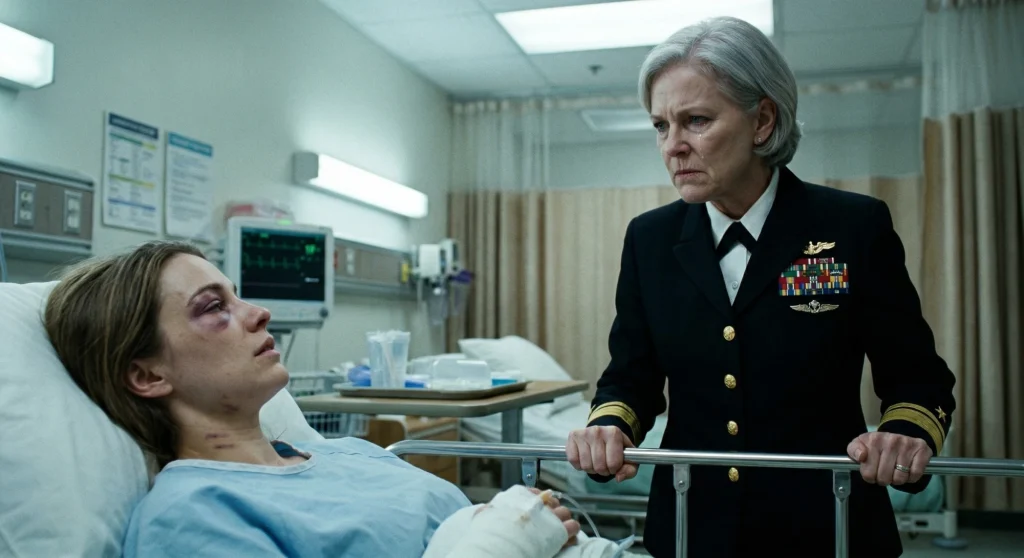

The fluorescent lights buzzed overhead like wasps trapped in glass. I gripped the bed rail until my knuckles went white, staring down at what they’d done to my daughter.
Clara’s left eye was swollen shut — purple, black, grotesque. Her arm sat in a cast. Dark bruises ringed her throat like a necklace made of violence.
She hadn’t looked at me when I walked in. She was staring at the ceiling with the same thousand-yard gaze I’d seen in young soldiers in Kandahar.
“Clara.”
She flinched. Then her one good eye found me.
“Mom.” Her voice cracked like old paper. “It was Dustin. He lost at poker again. His mother and sister held me down while he—”
She stopped. She didn’t need to finish.
Something shifted inside me. Not anger — anger is sloppy, reckless. This was different. Cold. Surgical. Like a scalpel being unwrapped.
“I’m going to handle this,” I said quietly, brushing the hair away from her swollen cheek.
“Mom, no. You don’t understand. They’ll hurt you. They’ll hurt Laya.”
I leaned close. My voice dropped to the same tone I once used to command field medics under fire.
“Sweetheart. I am not the helpless old woman they think I am.”
My name is Shirley Harris. Major Shirley Harris, retired. Thirty-one years as a combat nurse. Two tours in Afghanistan. A Bronze Star. A titanium plate in my left hip, and a memory that never misses a detail.
Two years ago, after my husband Frank died, my stepson Adam convinced me to sign a temporary Power of Attorney. “Just a safeguard for your later years, Shirley,” he’d said, his smile as slippery as wet tile.
I’d been grieving. I trusted him.
That was my mistake.
Adam locked me in Crestwood Meadows, a nursing home that cost six thousand dollars a month — paid from my own frozen accounts. I couldn’t leave without his written permission. I couldn’t access my money. I was a prisoner in a building that smelled like lavender air freshener and slow death.
But Adam had miscalculated. Badly.
He assumed that at sixty-nine, I was finished.
Six hours before I stood over Clara’s hospital bed, I was already awake at 0500. My morning routine hadn’t changed since boot camp: twenty wall push-ups, fifty crunches, breathing drills. My body was older, sure. But it wasn’t weak. It was coiled.
I’d just pulled on my cardigan when Jessica, the new nurse, hurried in carrying a medication tray.
“Nurse,” I said sharply.
She nearly dropped a vial.
“That’s Metformin,” I said, nodding at the tray. “Mr. Henderson in 4B is hypoglycemic. You give him that, you’ll put him in a coma. Check your chart.”
Jessica’s face drained white. Her hands started trembling.
“Oh my God. You’re right. I’m so sorry, Mrs. Har—”
“Major Harris,” I corrected. “And you’re welcome. Now go fix it before someone dies.”
She rushed out. I stood alone in my room, feeling the familiar itch of uselessness. A lioness stuck in a petting zoo.
Then the phone rang.
“Is this Shirley Harris? Mother of Clara Rakes? Your daughter has been admitted. She fell down the stairs.”
Fell down the stairs. The oldest lie in the book. Victims of domestic violence always “fall.” They always “walk into doors.”
“I’ll be there in twenty minutes,” I said.
But I couldn’t simply walk out. Adam’s instructions were clear: Shirley is confused. She wanders. Do not let her leave.
So I made a call.
“Get me Dr. Pete Rodriguez, Chief of Staff.”
A gravel voice answered. “This is Rodriguez.”
“Pete. It’s Shirley Harris.”
Silence. Then: “Shirley? My God. What do you need?”
“I’m locked in Crestwood Meadows. My daughter’s in your ER. She didn’t fall down any stairs.” I paused. “I’m calling in the favor from Kandahar.”
Pete didn’t hesitate. He remembered the night I held pressure on his femoral artery for three hours under insurgent fire. Some debts go beyond paperwork.
“Emergency specialist consult,” he said immediately. “Transport will be at your door in thirty minutes.”
When the ambulance arrived, the Crestwood manager tried to block me, waving my admission papers.
The transport nurse handed him a signed transfer order. I walked past him with my spine straight, carrying nothing but my purse.
I wasn’t leaving a nursing home. I was deploying.
After I saw Clara, I took a cab to the Dorchester address. The house looked ordinary from the outside. Inside, it was a disaster.
Stale beer. Spoiled food. Unwashed bodies. The living room floor was a wasteland of pizza boxes and stained carpet. Two women lounged on a sagging couch watching reality TV.
The older one, heavyset with badly dyed blonde hair, was Brenda — Dustin’s mother. The younger, thin and sharp-faced, was his sister Karen.
“Oh, it’s you,” Brenda muttered without looking up. A cigarette dangled from her lip. “Clara ain’t here. She ‘fell.’ Clumsy idiot.”
“Kitchen’s a mess,” Karen added. “Make yourself useful.”
I didn’t answer. From the back of the house, I heard a small, choked sob.
I walked past them. My shoes stuck to the filthy floor.
In a cramped room beside the kitchen — barely bigger than a closet — I found her. Laya. My ten-year-old granddaughter. She sat on the bare floor, clutching a headless doll, eyes blank.
“Laya?”
Before I could reach her, a boy barged in. Kyle, Brenda’s grandson. Big for his age, face twisted with cruelty.
“Hey stupid!” he shouted at Laya. “Still crying?”
He snatched the doll and started twisting its remaining arm.
I moved.
Thirty years of muscle memory fired at once. Two strides. I caught his wrist and applied a pressure-point hold — enough to stop him, not enough to injure.
“Drop it,” I said calmly.
Kyle yelped. His fingers opened. The doll fell.
“We don’t steal,” I said, releasing him.
He screamed immediately. The women came running.
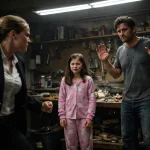
Karen burst in, face contorted. “You crazy old hag! Get off my son!”
She lunged at me, nails out like claws. I sidestepped, caught her wrist, and pressed a nerve cluster near her elbow. Her arm went dead. She collapsed to her knees, gasping.
“You’re telegraphing your moves, dear,” I said evenly. “And your nails are filthy.”
Brenda stormed in behind her, red-faced, gripping an iron fireplace poker. She swung it at my head.
I didn’t retreat. I caught the poker mid-swing, twisted it from her hands, and used the stone mantle for leverage to bend the iron bar nearly forty-five degrees. The sound of groaning metal filled the room.
I dropped the bent poker at her feet. It clanged against the floor.
“This house is under new management,” I said. “Rule one: you don’t touch Laya. Rule two: you don’t touch me. Rule three: this place is a biohazard.”
I pointed at Karen. “You’re doing the floors.”
I pointed at Brenda. “You’re doing the dishes.”
I pointed at Kyle. “Sit in that chair. Don’t move.”
They stared at me, stunned.
“Move,” I ordered.
They moved.
For two hours, I cleaned. I bathed Laya, washed the grease from her hair, found her clean clothes. I set up the guest room, locked the door from inside, and handed her the key.
Downstairs, the women scrubbed in silence.
At six o’clock, Brenda tried to reclaim control. She shoved a package of gray, sour-smelling ground beef into my hands.
“Make dinner,” she sneered. “Don’t waste it.”
I looked at the meat.
Then I smiled.
I cooked the rotten beef in a skillet, drowning it in half a bottle of “Satan’s Revenge” ghost pepper sauce I’d found in the pantry. In a separate, clean pan, I made a small, fresh meal for Laya and myself.
When I called them to the table, they rushed in, eager to watch me serve. They piled the burning, spoiled meat onto buns and bit down with greedy enthusiasm.
The reaction was instantaneous.
Brenda’s face turned fire-engine red. Karen began coughing violently. Kyle gagged and sputtered. All three stampeded to the sink, shoving each other aside for the tap.
“Too flavorful?” I asked pleasantly, taking a bite of my own sandwich.
“You poisoned us!” Brenda wheezed, tears pouring down her cheeks.
“Rule four,” I replied. “Don’t waste food.”
I was sitting awake in the armchair when Dustin Rakes came home at two in the morning.
The front door didn’t open — it exploded inward from a kick.
“Clara!” he roared. Whiskey and stale smoke rolled off him in waves. “Get me a beer!”
He staggered into the living room. Six feet tall, thick with fat and muscle, shirt half-open. When he noticed me, he squinted.
“Who the hell are you?”
“I’m the babysitter,” I said.
His expression darkened. “You’re the old bat. Clara’s mother.” He stepped forward, fists tightening. “Get out of my house.”
“No.”
He blinked. Clearly, he wasn’t used to that word. Then he bellowed and threw a wide, drunken haymaker at my head.
I stood up and stepped into the swing. His fist sailed over my shoulder. Using his own momentum, I redirected his weight forward and down. He crashed through the coffee table, splintering it into pieces.
He scrambled up, furious, and charged again.
I sidestepped with simple footwork and drove my elbow into his solar plexus. The air burst from his lungs. He dropped to his knees, gagging.
“My daughter didn’t fight back,” I said quietly, standing over him. “Maybe she believed you could change. I don’t share that belief.”
I grabbed a fistful of his hair and dragged him — bent over, wheezing — into the downstairs bathroom. The one he never cleaned. The toilet bowl was stained brown and yellow.
“You like filth?” I asked. “Look at it.”
I shoved his face toward the bowl and flushed. Water swirled up and splashed across his face. He screamed — a choking, bubbling sound.
I released him. He crawled backward into the corner, crying, wiping his face.
“I’m calling the cops!” he shouted. “You assaulted me!”
“Go ahead.”
I sat back down and picked up my book.
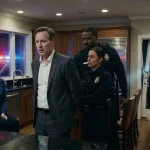
Fifteen minutes later, Sergeant Miller walked through the front door with a rookie behind him.
“That crazy old woman attacked me!” Dustin yelled, pointing. “Arrest her!”
Miller looked at Dustin — soaked, shivering, pathetic. Then he looked at me and squinted.
“Ma’am? Have we met?”
I smiled slightly. “Perhaps at the VA, Sergeant? You had a nasty shrapnel wound in ’95.”
Miller’s eyes went wide. “Major Harris? You stitched me up in the field.”
“Good to see you, Miller.”
“She attacked me!” Dustin shrieked.
Miller raised a hand. “Major, what happened?”
I pulled out my phone. “I came for my granddaughter. Mr. Rakes came home drunk and swung first. I defended myself.” I paused. “But you should see these.”
I showed him the photos of Clara. The broken arm. The bruised, battered face.
Miller’s expression turned to granite. He studied the photos, then slowly looked at Dustin.
“Mr. Rakes,” he said in a low, dangerous voice. “Did you do this to your wife?”
“She fell down the stairs!” Dustin squealed.
Miller handed my phone back. “You’re lucky I can’t arrest you on photos alone. But if I see one more bruise on anyone in this house—” He let it hang.
He turned to me. “Major, will you be safe tonight?”
“Perfectly safe, Sergeant.”
They left. Dustin bolted upstairs. I sat back in the armchair.
The first battle was won. The war was just beginning.
For three days, the house stayed silent. A brittle, dangerous kind of silence.
On the fourth morning, Brenda walked into the kitchen with a new attitude. A sickly sweet smile spread across her face.
“Shirley,” she said softly. “I want to apologize. Stress made me act like someone I’m not.”
She held out a china cup. “Chamomile tea. A peace offering.”
I accepted it. Steam curled upward — chamomile, yes. And underneath, the unmistakable bitter trace of crushed sleeping pills.
“How thoughtful,” I said.
Then I “stumbled,” sending the scalding tea flying. It splashed directly onto Karen’s bare foot as she walked in.
“AHHH!” Karen screamed, hopping wildly. “You stupid old—”
“Oh dear,” I said weakly. “My hands are so shaky these days.”
I retreated to my room. Poison meant escalation. They were getting desperate. I needed intelligence.
That night, I slipped into the hallway shadows. Their voices drifted from the kitchen.
“It’s the only way,” Brenda hissed. “She knows too much. If she talks to the cops again, we’re done. We have to send her back to Crestwood.”
“How?” Dustin asked.
“You knock her out,” Brenda said coldly. “We tie her up. Call the home and say she had a psychotic break. Once she’s locked up and medicated, she can’t hurt us.”
“What about the Cayman money?” Karen whispered. “If she starts digging into the finances—”
Cayman money. My ears sharpened. Account 774-B. I stored every detail.
“We deal with her tonight,” Brenda ordered. “Midnight.”
I returned to my room. In Kyle’s closet I found an aluminum baseball bat. I stripped the bed and arranged pillows under the blanket to look like a sleeping body.
Then I stood behind the door, bat in hand, and waited.
At 11:58 PM, the floorboards creaked.
The door opened slowly. Dustin slipped inside holding a coil of rope. He crept toward the bed — toward the decoy.
I stepped out of the shadows.
Crack.
The bat struck the back of his knee. He dropped without a sound. Before he could scream, I hit a nerve point in his shoulder. His arm went dead.
I worked fast. Dragged him onto the bed. Shoved a towel in his mouth. Used his own rope to tie him to the frame. Pulled the duvet over him, leaving only his head exposed, face buried in the pillow.
I switched off the lights, moved to the corner, and pressed Record on my phone.
I took a deep breath.
Then I screamed — a high, terrified shriek that mimicked Clara’s voice.
“No! Dustin, stop! Please!”
“He’s got her!” Brenda shrieked from the hallway. “Let’s finish this!”
The door burst open. Brenda charged in gripping a golf club. Karen followed with a cast-iron skillet. They saw the struggling figure on the bed and thought it was me.
“You ruin everything!” Karen screamed, slamming the skillet into the figure’s ribs.
CRACK.
Dustin’s muffled scream was pure agony.
“This is for my house!” Brenda shouted, swinging the golf club like an axe. She brought it down on her own son’s back. Once. Twice. Three times.
Metal striking flesh. The sound filled the room. They were blinded by rage, unleashing years of bitterness on the person they believed was their enemy.
I let it continue for ten seconds. Long enough for felony charges.
Then I flipped the light switch.
“Surprise,” I said.
They froze mid-swing. The sudden light made them blink. Slowly, they looked down at the bed.
Dustin stared back at them. Eyes bulging above the gag. Terror and betrayal written across his battered face.
The golf club slipped from Brenda’s hand and clattered to the floor.
“My, my,” I said, raising my phone so the red recording light was clearly visible. “What a lovely family video.”
Karen made a strangled sound. Brenda turned pale green.
With my free hand, I picked up the landline and dialed 911.
“911, what’s your emergency?”
“Yes,” I said, my voice shaking with carefully staged fear. “My name is Shirley Harris. There’s been a terrible assault. A mother and sister just beat their son nearly to death. I tried to stop them. Please hurry.”
I hung up and looked at them.
“Police will be here in four minutes,” I said calmly. “I suggest you don’t run.”
The fallout was nuclear.
The video left zero room for doubt. Brenda and Karen were arrested on the spot — aggravated assault and conspiracy. Dustin was rushed to the ICU with broken ribs and internal bleeding.
Three days later, I met their attorney, Robert Fielding, in the hospital’s cardiac ward where Brenda was held under police guard. The shock of her arrest had triggered a heart attack.
The room looked like a portrait of defeat. Brenda in the hospital bed. Karen nearby, hollow-eyed. Dustin in a wheelchair, wrapped in bandages.
“Ms. Harris,” Fielding said nervously, wiping sweat from his forehead. “We’d like to discuss a settlement to keep the video private.”
“I have terms,” I replied.
“Name them.”
“First: Dustin signs divorce papers today. Clara gets full custody of Laya. Second: termination of all parental rights. Third: five hundred thousand dollars for pain and suffering.”
“We don’t have that kind of money!” Brenda rasped. “Dustin gambled everything!”
“Don’t lie to me, Brenda,” I said quietly. “Let’s talk about the Rakes Family Trust. Cayman Islands. Account 774-B. The one-point-five million your husband left behind.”
The room went dead silent.
Dustin’s head snapped toward his mother. “What money? You said we were broke! You let me gamble away our grocery money while you were sitting on millions?”
“Shut up, Dustin!” Brenda hissed.
“Pay her,” Dustin growled. “Pay her, or I testify against you myself.”
The check was written within forty-eight hours.
But I wasn’t finished.
When news spread about the so-called “Hero Grandma,” an investigative journalist named Jessica Chen contacted me. She suspected a deeper story.
“Major Harris,” she said. “I believe you’re a victim of elder financial abuse. Your stepson, Adam.”
With Clara’s help and the settlement money, we hired Grace Cho, an elder-law attorney with a reputation like a chainsaw. Together, we audited Adam’s finances.
What we uncovered was devastating: drained accounts, forged signatures, falsified competency reports.
We took him to court.
I wore my Navy dress uniform. Adam sat across from me looking smug — until Dr. Pete Rodriguez took the stand and testified about my mental clarity. Then Jessica published a front-page exposé.
The judge didn’t hesitate.
“Mr. Harris,” she said sharply. “This is exploitation of the highest order. Power of attorney is revoked. Full restitution is ordered. This matter is referred to the District Attorney for criminal prosecution.”
Adam left the courtroom in handcuffs.
Two weeks later, Clara, Laya, and I moved into a penthouse overlooking the harbor. Sunlight poured through floor-to-ceiling windows.
Laya ran across the hardwood floor, laughing — a sound I hadn’t heard in years. Clara stood in the kitchen, safe, healing, free.
The phone rang. Crestwood Meadows billing department, asking when Adam would resume payments.
I looked out at the ocean.
“Send the bill to Adam’s attorney,” I said, and hung up.
“Mom?” Clara walked in, drying her hands on a towel. “Are you happy?”
I looked at my granddaughter spinning in the sunlight. I looked at my daughter, standing tall for the first time in years.
“More than happy,” I said. “I’m home.”
My name is Major Shirley Harris. Survivor. Mother. And, at last, the commander of my own fate.
Original fictional stories. AI-assisted creative content.